Showing posts with label pumpkin. Show all posts

Saturday, November 5, 2011

RECIPE: Pumpkin Pie ... with Cheesecake?

I know what you're thinking.

No, really, I do.

Never mind what you're thinking.  What I'm thinking is,

"This is a delicious pumpkin pie."

Thus begins the epic saga of how I learned to make pumpkin pie from scratch, without all of the proper ingredients, and with a few random additions (and substitutions).  I combined three existing recipes (not counting the one I used to make my pumpkin seeds), one each for the pie crust, pumpkin-from-an-actual-pumpkin filling, and the mascarpone filling recipe my sister introduced me to.

To bake this pie, which is a fairly complicated process, I first cut up the pumpkin and threw it in the oven to bake for 90 minutes, then mixed the dough and put it in the fridge to chill for an hour, then mixed the fillings (including the pumpkin filling after the pumpkin came out of the oven), then rolled out the crust, filled the pie, and put it in the oven.  It was the perfect pacing ... not quite rushed, but my hands were busy up until the moment I put the pie in the oven.  I used the time the pie was in the oven to clean up my huge mass of dirty dishes ... and to start drafting this blog.

Making pies is a dirty business!

Without further ado, I give you:


THE PUMPKIN
INGREDIENTS

1 pie pumpkin (also called a sugar pumpkin)

DIRECTIONS

Cut off the stem of your pumpkin and cut the gourd in half.  Scoop out the seeds, setting aside for roasting (this way, or this other way), and getting rid of the stringy pulp.  Place the two halves cut edge down on a foiled baking sheet, and cook at 350 degrees Fahrenheit for 60 to 90 minutes, until a fork can poke easily through the outer skin.

Remove from the oven, turn over, and (carefully!) scoop the pumpkin flesh into a large glass bowl.  Do not burn yourself doing this!

Use a hand mixer or immersion blender to cream the flesh until it's almost creamy in texture.  Then, measure out what you need for your pie and set the remaining filling aside.


Next, mix your pie crust so that it has time to chill.


THE CRUST

INGREDIENTS

1 1/4 cups whole-wheat flour, plus extra for rolling

1/2 teaspoon salt
1 1/2 teaspoons sugar
8 Tablespoons (1 stick) unsalted butter, very-cold, cut into small cubes
3 to 5 Tablespoons ice water, very cold

DIRECTIONS

As soon as you think of making a pie crust, run to your fridge, cut up a stick of butter, and put it into the freezer.  I cannot stress how important the chill factor of your butter is to making a good pie crust ... and, ideally, the longer you freeze it, the better (even overnight ... or longer).

Place the dry ingredients into a food processor and pulse until well combined.  Add half of the butter and pulse 6 to 8 times.  Add the other half of the butter and pulse until you have a mixture that resembles coarse meal, with pea-size chunks of butter throughout.

Add two tablespoons of your ice-cold water to the food processor and pulse a couple of times.  Then, add more ice water, about one tablespoon at a time, pulsing until the mixture just barely begins to clump together (I used 4 tablespoons).  If you pinch some of the crumbly dough and it holds together, it's ready.

Place the mixture on a clean, smooth surface.  Using your (clean) hands, press the dough together and shape into a disc.  Knead only enough to just bring the dough together.  Do not over-knead!  You should be able to see little bits of butter speckling the dough.  Visible pieces of butter are a good thing.  Sprinkle the disc with a little extra flour on all sides and wrap in plastic wrap.  Refrigerate at least 1 hour.  You can keep the dough frozen for months, if you take the time to defrost in a refrigerator prior to use.

When you are ready to roll out the dough, remove the disk from the refrigerator and place on a clean, smooth, lightly floured surface.  Let it sit for 5 to 10 minutes, then sprinkle some flour on top.  Using Roll out the dough into a 12-inch circle, to a thickness of about 1/8 of an inch thick.  As you roll, check to make sure the dough is not sticking to the counter.  If it is, sprinkle a little more flour underneath.

To transfer the pie crust, fold in half over a long knife, then pull the knife out from in between.  Carefully lift off of the counter with both hands, and place on to a 9-inch pie plate, lining up the fold with the center of the pan.  Gently unfold and press down into the pie plate.  My sister gave me a lovely cranberry-enameled stoneware deep-dish pie plate, and this recipe is the perfect size for it.


Next, prepare the fillings.


THE CHEESECAKE FILLING
INGREDIENTS


8 ounces (1 package) cream cheese or mascarpone, softened 
1 slightly beaten egg yolk
2 tablespoons honey
1/2 teaspoon vanilla
DIRECTIONS
Once the pumpkin is tender and out of the oven, turn the temperature up to 375 degrees Fahrenheit.
In a medium mixing bowl, beat cream cheese, egg yolk, honey, and vanilla with an electric mixer on low to medium speed until smooth.  
Set aside.
THE PUMPKIN FILLING
INGREDIENTS

1 1/4 cups fresh-baked pumpkin pulp 
2/3 cup plain yogurt
2 slightly beaten eggs
1/3 cup packed brown sugar
2 teaspoons of cinnamon
1 teaspoon ground ginger
1/2 teaspoon ground nutmeg
1/4 teaspoon ground cloves
1/4 teaspoon ground cardamon
1 teaspoon lemon juice

DIRECTIONS

In a separate mixing bowl from the cream cheese mixture, beat together the pumpkin, yogurt, eggs, brown sugar, lemon juice, and spices until smooth, about a minute, scraping down the sides of the bowl with a spatula for an even mixture.

 ... and, all together now:

Pour the pumpkin filling into the crust-lined pie plate, and drop the cream cheese mixture on top by the spoonful.  Use a thin spatula or a butter knife to swirl the two mixtures together in as artful a display as you can think up.

Bake in the 375 degree Fahrenheit oven for 50 minutes, or until the top of the pie is puffy and browning, and a knife or toothpick comes out clean (mine had to bake for 60 minutes).  Check on your pie about 40 minutes in.  If the crust is turning dark, take the pie out and apply foil to the rim, then replace in the oven for the remainder of your baking time.

When completely done, remove the pie from the oven and let cool on a wire rack for 1 hour, then cover and chill for two or more hours before serving.

And ... enjoy!


Pumpkin Seeds - With a Twist

I made a pumpkin pie from scratch today, which mean that I had more pumpkin seeds on hand.  I wanted to try something different, so I did a little digging and a little tweaking and came up with the following recipe--formulated to make using the seeds of one pie pumpkin.  You can use either shelled or unshelled pumpkin seeds for this recipe, which makes it fairly diverse.

INGREDIENTS

1 to 1 1/2 cups pumpkin seeds
1 egg white (you can use the yolk in the pumpkin pie recipe, see here)
1/3 cup sugar
1/2 teaspoon salt
1/2 teaspoon cinnamon
1/8 teaspoon cardomom
1/8 teaspoon nutmeg
1/8 teaspoon allspice
1/8 teaspoon ginger
1/8 teaspoon paprika

Preheat oven to 350 degrees Fahrenheit.

Spray a nonstick cookie sheet with oil, or put foil in the bottom of your pan.

Whisk the egg whites till they're good and frothy, then add the other ingredients (sans seeds) and whisk together.


Add your pumpkin seeds and stir till they're evenly coated, then dump the seeds into your roasting pan and spread them in an even layer.

Bake for about 10 minutes, then stir and turn over.  Bake until the egg white mixture is becoming dry, about another 10 minutes.  Repeat until the seeds are dry and golden-brown.


Wednesday, October 26, 2011

How to make use of those pumpkin seeds ....

I ended up having a fair number of pumpkin seeds left from the pie pumpkin I gutted in making my roasted veggie dish, so I decided to put them to good use.  This isn't much of a recipe, I'm afraid, so much as a set of basic guidelines when it comes to roasting your own pumpkin seeds.  You will need salt, olive oil, and (of course!) your pumpkin seeds.


  1. Preheat oven to 400 degrees Fahrenheit.
  2. Separate the seeds from the stringy core, and rinse them in a sieve if you have one.
  3. In a small saucepan, add the seeds to salted water (about 2 cups of water to every 1/2 cup of seeds).  The saltier your water, the saltier the seeds.  I added about a tablespoon, and I could barely taste the salt.  Perfect.  
  4. Bring the saucepan to a boil and let simmer for 10 minutes.  
  5. Remove from heat and drain. 
  6. Add about a tablespoon of olive oil to the drained seeds and stir until they are evenly coated.  
  7. Spread the seeds out over the roasting pan, all in one layer, and sprinkle with any seasonings that you might like.  I used a touch of paprika and some ground thyme, but I'm sure a Touch o' Magic or garlic salt would be delicious, too.  I have used onion salt and a variety of other seasonings in the past, and you pretty much can't go wrong.
  8. Bake on the top rack until the seeds begin to brown (between 10-20 minutes).  Don't let them burn.  If they look like they might be browning, they probably are.  And that means they're done--do not let them get past the "golden brown" stage.
  9. When the seeds are browned to your satisfaction, remove the pan from the oven and let cool on a rack.
  10. Enjoy.


RECIPE: Roasted Veggies (& Tomatoes)

I used to think that roasting vegetables was a gourmet thing to do, or at the very least a dangerous proposition.  Vegetables?  They catch on fire!  Little did I know how truly easy it is to oven-roast a pan of veggies.  So, here's how I did it:


INGREDIENTS
 
1 pie pumpkin, skinned, seeded, and cubed
1 large red bell pepper, stemmed, seeded, and cubed
1 large green bell pepper, yaddayadda
4 roma tomatoes, cubed
3 garlic cloves, pressed or chopped fine
2 large sprigs of parsley, chopped fine
4-5 sprigs of fresh rosemary, chopped fine
Salt & fresh-ground black pepper, to taste
Olive oil
1/2 cup fresh Parmesan cheese

DIRECTIONS

Preheat oven to 400 degrees Fahrenheit.

In a large bowl, combine pumpkin (or squash), bell peppers, tomatoes, garlic, parsley, rosemary, salt and pepper.  Drizzle in olive oil, about 3-4 Tablespoons' worth, tossing until vegetables are evenly coated.

Transfer to a rimmed baking sheet or casserole dish.  Sprinkle half of the parmesan over the top of the vegetables (and tomatoes, which are a fruit as everyone knows).

Roast, stirring twice, until the squash is tender and beginning to brown at the edges (around 45 minutes).  Sprinkle the remaining cheese over the top of the vegetables and serve hot.


Monday, May 24, 2010

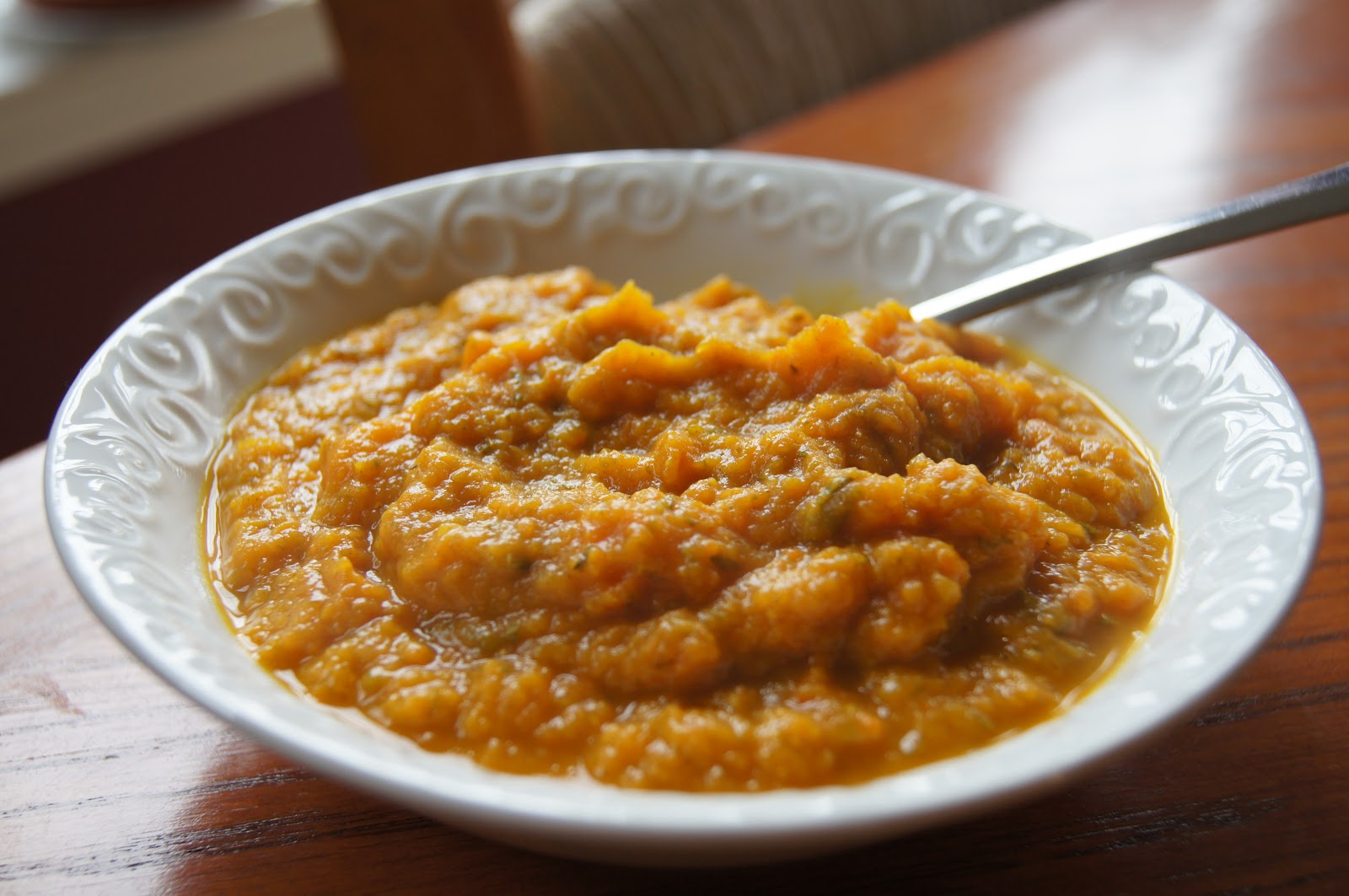
RECIPE: Pumpkin or Squash Soup - North African Style

I did not set the kitchen on fire today. Actually, today was TAME in comparison to my first mediterranean experiment (of the culinary type).

And I know it's high summer and that, as such, soup is generally not the number one item on the want-to-eat list. Thankfully, my parents keep the thermostat set at 76 degrees and thus I my adventures are not limited by the external atmosphere. On with the food!

Today I felt miraculously free to exercise my artistic license on the recipe at hand, which was from the same cookbook as last time (The New Mediterranean Diet Cookbook by Nancy Harmon Jenkins):

Pumpkin or Squash Soup - North African Style

Because I took such liberty with the original recipe, I feel no qualms about sharing it with you.

INGREDIENTS:
2 tablespoons extra-virgin (because the best virgins are extra-virgin) olive oil
1 medium carrot (or, in my case, about 10 mini-carrots), chopped
1 celery stalk (you can include 2 or more, according to preference), coarsely chopped
1 garlic clove, chopped
1/2 teaspoon crushed red chili pepper (or 1 small fresh red chili pepper, if you have one)
1 + 1/2 pounds pumpkin or hard winter squash, peeled and cubed (about 6 cups––I used a butternut squash and it came to approximately 7 cups ... so I just threw it all in)
1 - 14.6-ounce can chopped plum tomatoes with their juice
2 bay leaves
1 short piece of cinnamon (I did not have this, so I included 1/2 teaspoon ground cinnamon)
1/2 teaspoon ground turmeric
sea salt and freshly ground black pepper
1-2 tablespoons fresh lemon juice
3-4 tablespoons fresh chopped chives
1/8 cup fresh chopped cilantro or parsley

I also added:
1/2 teaspoon ground allspice
1/2 teaspoon ground ginger
about 1 square inch of finely chopped FRESH ginger (I'm a bit of a ginger fan)
1/2 teaspoon thyme

The recipe also calls for:
1 sweet red pepper, coarsely chopped
2 tablespoons finely chopped cilantro
... but I didn't include these, a) because I didn't have them, and b) I'm too lazy to run to Publix for 2 tablespoons of an herb I'm not even certain I like.

And thus! To the process! It is remarkably brief.

Chop everything beforehand. It will save you the scurrying and frazzledness of my experience.

Throw all of the olive oil, carrot, celery, garlic, and ginger in a large pot––you will make the whole soup in the one pot, so don't think small––set over a medium-low heat. Cook for 10 minutes or until the vegetables are soft but not browned. If you're a better cook than I am and have the peppers on hand, throw them in, too. Add the cubed pumpkin and stir the lot together. When the cubed pumpkin starts to sizzle, add the tomatoes, bay leaves, spices, and 2 cups of water. Bring this to a simmer (which takes longer than you'd think––about 10 to 15 minutes––and then cover the pan. Let the pot simmer for between 20 and 30 minutes, or until the pumpkin is soft enough to blend with a stick blender or a food processor (stick blenders are much less messy, and you don't have to switch pots). If you can, fish out the bay leaves before you blend. If you can't ... eh. Oh well. Add salt and pepper to taste, along with the lemon juice. If you're into cilantro, you're supposed to stir it in right before serving.

A quick note on the crushed red pepper thing: I was reading the back of the crushed-pepper jar and it said something about combining it with equal amounts of thyme and allspice. And, since I was in a mood to experiment, I threw all the spices into a little tiny cup and poured a touch of boiling water over them as I was chopping the butternut squash. The result? I think the rehydration technique brought out a bit more of the pepper flavor––it wasn't as dry and nasty when eating the soup as it normally is. I'm really not a fan of crushed red pepper flakes at all ... but you use what you have, so I tried it out. And it worked pretty well! I don't know if I would recommend rehydrating all your herbs and spices before cooking, but I think it's kind of fun.

Anyhow. The soup tasted pretty darn good. Between the turmeric and gingers and crushed red pepper, it's quite spicy (and would have been spicier if I had included the chopped peppers). It's not a creamy soup like a lot of pumpkin soups are, but there are merits to non-creamy soups. It leaves a faint zing on the back of the tongue, but it cleanses the palate instead of coating it like a cream-based sauce would. I threw around the idea briefly of maybe adding low-fat plain yoghurt to the soup once it cooled down, if one really wanted that creamy texture. It would be better than adding sour cream or heavy cream. I actually think this soup would taste really excellent as a cold soup––it's got enough flavor and spice that the coolness might even add the perfect soothing touch! I'll let you know tomorrow afternoon, when I taste it cold.


VERDICT: A success! (Although, I'm guessing, a little too spicy for some tastes.)